A few years ago, if you’d told me there was a better NAS than Synology I would have asked your tech-loving opinion. Another rare piece of tech that merged into the background was Synology NAS, one of those “funny pieces” in technology which became known as synology. It did its job quietly, had years of data without complaint and let me focus on my work rather than babysitting infrastructure. The hardware wasn’t just the hardware, it wasn’t only the . The most recent software that was shipped to synology, such as the high-technical software which made using a NAS truly easy. Yet, the company and its products are no longer the same. A series of anti-consumer policies, which are massive deal-breakers, have been a trend in Synology since early 2025. To this extent, I have switched from one brand to another NAS and am truly happy with the decision.
Why My Next NAS Won’t Be A Synology
It is not the same as it used to be, and its NAS devices aren’t worth the money either way. But the company didn’t lose its edge overnight, but it was a gradual transition through dozens of hardware decisions that made each new generation feel like slightly worse value than the last.
Proceesor choice is the most obvious problem with . The price reflected that it was fine, and the box of synology never had to be about raw power. In recent years, prices have increased and CPUs remained underwhelmed while s were still in decline. In the market for a new NAS I was buying, and at the cost of my basic Synology device that I am paying to buy it, an effective version of this would be able to purchase synology from another brand. However, newer models still have low-power embedded chips that fail when you go beyond basic file serving.
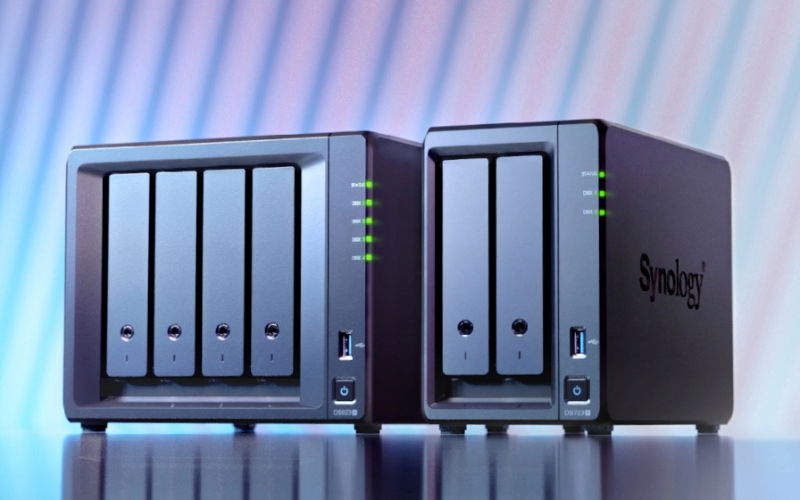
When Synology departed from Intel chips with Quick Sync to AMD Ryzen embedded processors in its Plus lineup, that problem was much worse. Ryzen sounds like an upgrade, but these specific chips do not have an integrated GPU. Many newer Synology systems have successfully killed hardware transcoding by that single decision. This was an extreme reversal for a widely used media server-based NAS that’s also known as ‘the most popular one is this. This is a change in CPU performance, which has been used to efficiently run tasks on the iGPU that now pushes up load, heat and power draw while performing worse.
It’s the same frustrating pattern that has been followed by Networking, which is a continuation of this trend. The rest of the NAS market has mostly been over, but synology remains expensive systems with single gigabit Ethernet ports or at best 2 (at least) two-gigabyte Ethernet. What is the meaning of 5GbE? Add-in cards or higher-tier models are often used in faster networking to push prices out of reasonable territory quickly. Synology’s hardware is stranded in the past when competitors are offering 10GbE or multi-gig ports at similar price points.
While I can still live with all of the above, why did I really stop believing in Synology because it was their attempt to lock newer systems into Synological-branded hard drives. An A NAS is the fundamental storage device of a . When restricting which drives can be used to limit the amount of available hardware that is otherwise capable, it becomes an artificially limited product. The move, despite the fact that Synology later reversed course after public outrage, made it loud and clear that hardware flexibility is no longer guaranteed; uncertainty makes long-term investment more difficult to justify.
Hardware Isn’t The Only Problem
Synology’s operating system for its NAS, DiskStation Manager, was always its strongest card ever to be diskSyncSync. But it was an approachable way of avoiding being limited, and powerful enough without forcing you into constant manual work; that balance has slowly been depreciated. I have noticed that recent updates started removing things I used to be rather than building on what was already working.
Similarly, for example, Photo Station and Moments apps were killed off by Synology Photos (which arrived with less features and weaker handling of metadata) which was replaced with Synlogy Photos. The same route was followed by Video Station, which quietly disappeared (and left users looking for third-party solutions) and walked away from the video station.
Media support has remained degraded on top of that, with media support still weakening. Daily playback was less reliable due to HEVC decoding and transcoding issues that led to the loss of confidence in everyday play back. Those tasks that were once out of the box now required Docker containers, workarounds and forum digging.
The Switch Was Easier Than I Thought
Looking for a replacement of my years old DS420j. I am looking for an appropriate alternative, but it’s hard to find one from Synology that is good hardware under $500. The Ugreen Nasync DH4300 Plus cost about $364 and I ended up getting the . No one Synology model matches it hardware-for-hardware at that price is available, however, with a single version of the same model.
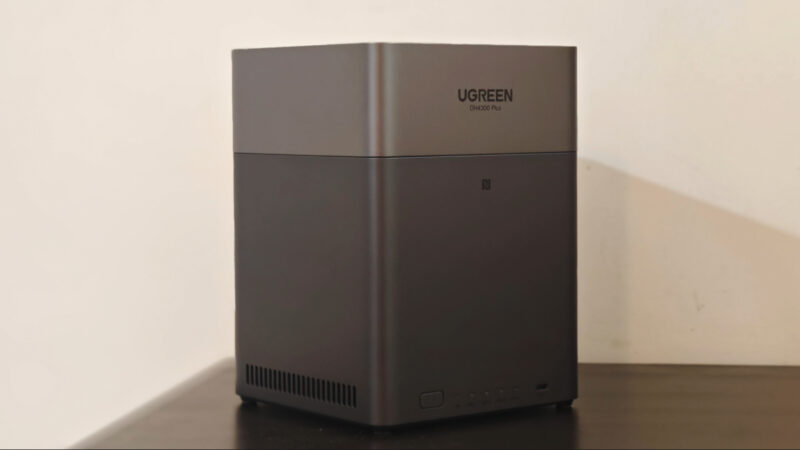
I compared it with the Synology DS423, d423+ and s925+, which is identical to functionality but almost twice as expensive. This is a table below that should be used to put things in perspective.
| Feature | Ugreen NASync DH4300 Plus | Synology DS423 | Synology DS423+ | Synology DS925+ |
| — | — | — | — | — |
| Current US Street Price | $364 | $379.99 | $499.99 | $639.99 |
| Processor | Rockchip RK3588 (8-Core ARM) | Realtek RTD1619B (4-Core ARM) | Intel Celeron J4125 (4-Core x86) | AMD Ryzen V1500B (4-Core x86) |
| AI Processing | NPU (6 TOPS) | None (CPU only) | None (CPU only) | None (CPU only) |
| Memory (RAM) | 8 GB LPDDR4X (Soldered) | 2 GB DDR4 (Soldered) | 2 GB DDR4 (Expandable) | 4 GB ECC DDR4 (Expandable) |
| Networking | 1x 2.5GbE | 2x 1GbE | 2x 1GbE | 2x 2.5GbE |
| M.2 NVMe Slots | None | None | 2x M.2 (Cache/Pool) | 2x M.2 (Cache/Pool) |
| Drive Bays | 4 | 4 | 4 | 4 (9 w/ Expansion) |
| Video Output | HDMI 2.1 | None | None | None |
| Hardware Transcoding | Yes (via HDMI/Software) | No | Yes (Intel QuickSync) | No |
| Software | UGOS Pro | DSM 7.2 | DSM 7.2 | DSM 7.2 |
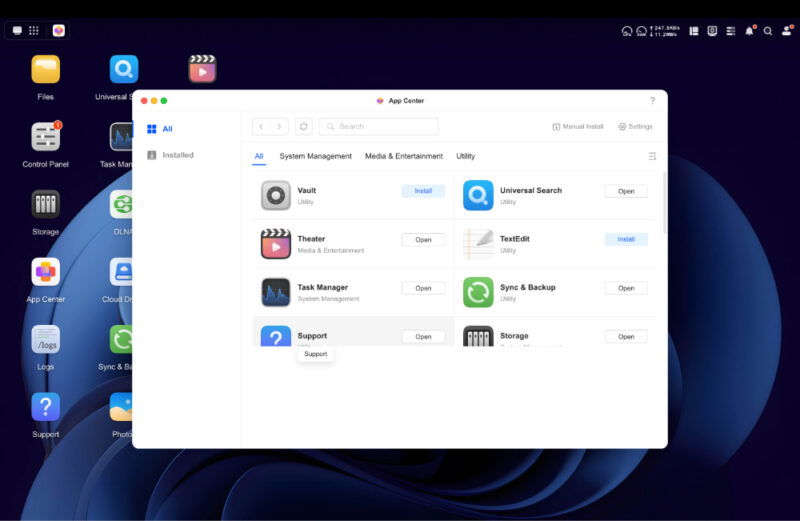
DH4300 Plus (hardware) While the hardware solves most of my Synology problems, the software adds to the experience even more. Like Synology runs DSM, Ugreen NAS devices run UGOS out of the box as does RMS. This is the best of all time.’ DSM has been a ‘diseaser’ after testing on the DH2300.
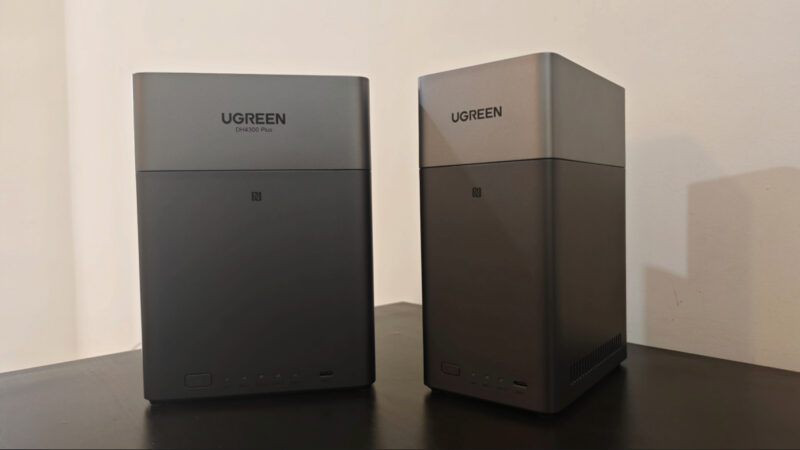
The last three months I have maintained it 24/7 without any problems, with scheduled maintenance once a week for updates and Docker restarts. I have a trim plan for the HDDs, which is scheduled to be done once in. month as well and that’s also my goal of . Two users are there; some PCs were linked to the , three Docker containers and automatic photo and cloud syncing. It also serves as my media server (plex movies, Roon music), etc.
Similarly, all the apps you use with DSM are included in UGOS (in case you don’t want to host everything on your own) and that is why I am not interested in doing it myself. It provides you with an app for storing media files such as movies and other videos, which allows you to stream them to your smart TV (whether on Google TV or Apple TV). Photos app was very useful for , I found it really helpful. This sorts photos by faces, scenes and places of pictures. This is also a way to clean up duplicates and even create albums by itself. If you generate an link or a QR code, and send it to family without installing anything like that, you can create ‘links/dialectrs’.
The benefits are many, but you don’t need a NAS. Plenty of free apps out there that let you take control, even when it’s hosted on your PC? We can’t recommend any of the best apps for starters to self-hosted.
Thanks for reading I Finally Moved Away From My Synology NAS and I Don’t Miss It
