I don’t think it is practical to have a dedicated toolkit for every quick measurement. But most of the stuff you need on your phone is already in place, so that it can be a handy multi-tool. What are some of the apps that measure everything from physical dimensions, angles to light and sound levels? From your pocket.
Measure Object’s Size with the Phone Camera
Probably the most common measure we use is size measurement, which may be best for this purpose with the AR Ruler App. It uses your phone camera to measure object size with high accuracy and precision, for example, by using the app’s . It is a real-time ruler that measures the object in various directions and even makes several measurements in one case.
In order to measure something, you begin another project and point your camera toward one end of that object. Press the yellow Plus (+) button to begin taking a measurement, move back to the other end and press the ** Plus (+)* button again. It will show the total size of the object. You can choose your preferred units from the Settings in the top right corner of .
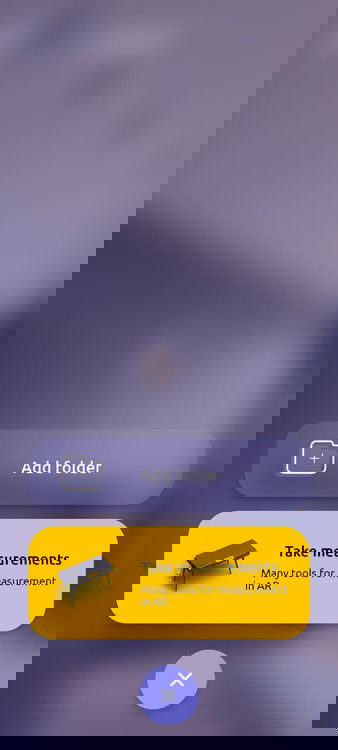
The size of flat objects/surfaces is most accurate, I think it is the best to use? The premium version is required if you want more advanced measurement methods such as measuring diameter.
Tilt Phone to Measure Angles
The best way to measure angles is by using your phone as a digital protractor, so that objects and surfaces are perfectly inclined. I use this Clinometer app, which uses a simple digital 180-degree meter powered by the phone’s Accelerometer and Gyroscope.
If you hold your phone vertically and tilt it to find the exact angle against gravity, just hold down. Most phones have flat sides, so it’s easy to use your phone to measure angle of any object by holding your smartphone against the same thing. In addition, it has a purpose to check the gravity of objects. Just hold the phone horizontally on its back, and it will appear as a blue digital bubble level tool. I don’t use this often but it was very helpful once when I had to level my cooktop.
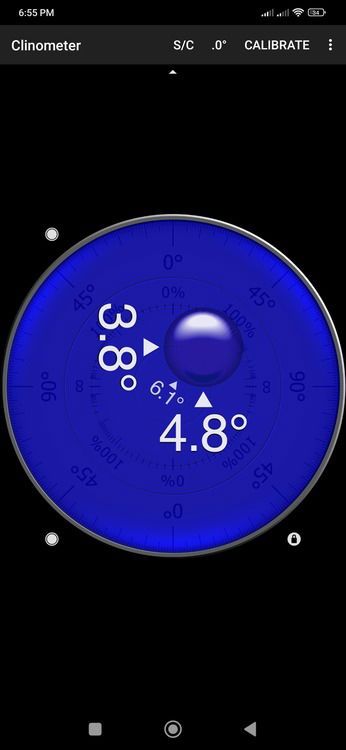
Both of these functions are free, but there are in-app purchases to unlock the relative angle tool and view the angle in camera view.
Measure Distance Using the Camera
Want to know how far is an object from your current location? With the Smart Measure app, you can do it with a surprising accuracy. It wittyly uses trigonometry to measure distance from your height and angle of your phone. The distance is 75m, but I think it’s the most accurate metric for distances below 30m. It’s good enough for me because I use it mostly inside the home or in my garden.
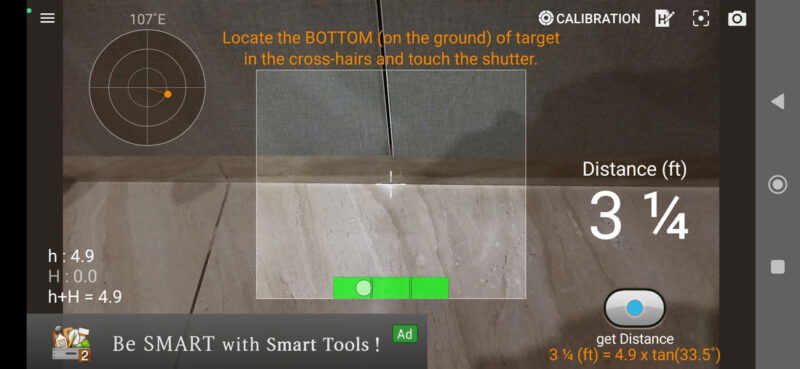
To use the app, just point the crosshair at the bottom of the object on the ground to put the application in place. Real-time It will tell the distance of a . Calculations depend on phone height, 4. Default 9ft by . When it is at a different height, you should be sure to change the phone when taping the H icon. A developer provides Smart Distance app for that if you want to record distance at longer distances – like up to 1km – the application.
Use Phone as a Light Meter
No pro photographer, but I know how much lighting matters – especially for nighttime photography. Good lighting makes your camera not need to raise ISO too much, causing noise (or )? Lux Lightmeter I can’t compromise on quality and a perfect lighting for my photos at special occasions.
This app is based on your phone’s light sensor to detect illuminance in a specific location. When you need to photograph anything or area, you can take your phone in front of it to measure illuminance (lx)? This is a graph at the bottom of the app that shows current illumination with an entire history of changes.
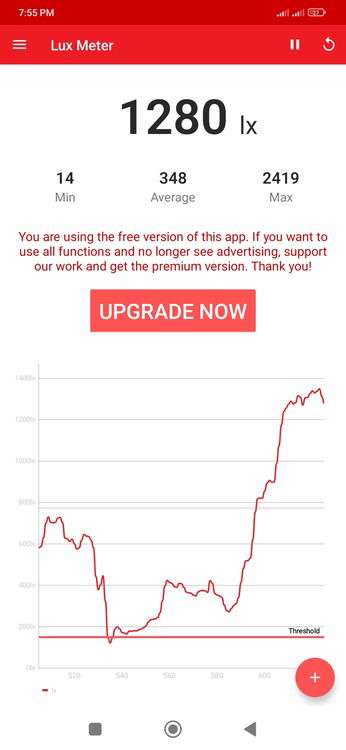
I want to reach at least 500lx illuminance for indoor photos, 1000lex as my main target. Nevertheless, it’s hard to get 1000lx without any direct light source on the object.
Measure Sound Levels in Decibels
For me, I have tinnitus and it’s very important for me to measure sound levels so that areas/sources which always produce more than 80 dB sound. My app, Sound Decibel Meter, helps me to accurately measure sound levels and displays a history chart for general sounds levels.
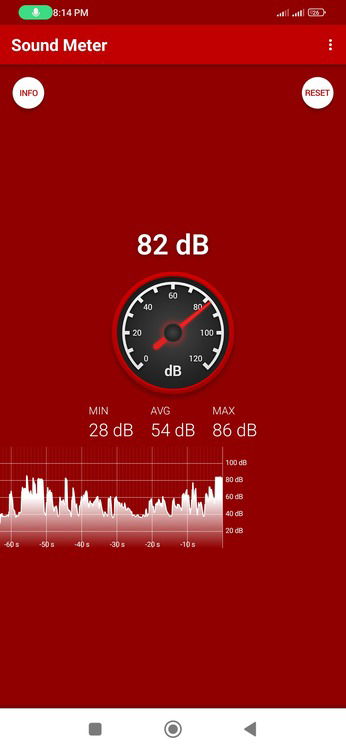
It listens to sounds from your phone’s microphone and can reliably detect sound levels up to 100 dB in the app, which uses its own-phone. This app also helps with other day-to-day tasks, besides noise detection. I’ve re-fixed the left and right sound balance in speakers, etc. using it for example, to compare manufacturer claims with appliances noise volume of appliances. Also, you can search for quiet areas (under 50 dB) to do work/study with it.
Note that these apps can’t replace the accuracy of professional tools. Nevertheless, their estimates are almost exactly the same as real measurements; at least for size, distance and angle dimensions that I have used with actual tools. Alternatively, for more specialist measuring, see how you can measure altitude with your phone.
Thanks for reading How I Turned My Android Phone Into an All-In-One Measuring Tool
