It’s a sudden and frustrating thing to run out of disk space on Linux, as is the case with . It’s a one-minute everything that works well; the next, updates fail, applications slow down or the system refuses to cooperate with itself. This is a problem, especially on systems that run for long periods of time without maintenance. Linux, thankfully, gives you some useful tools and methods to identify the problem and fix it step by step without breaking your system.
The Effects of Low Disk Space on Linux
What you might think is the most trouble with low disk space on Linux? Free space is required in the system to process temporary files, logs, lock files and memory swapping as well as everyday tasks. When my Linux hard drive is running out of space, the first thing I notice about it is that everything goes slow down. Viruses can freeze programs, the desktop lags and simple tasks that are slow to open.
When it comes to a , apps often crash without warning because they can’t make the files that should be run properly. Package managers such as APT or DNF, plus need space to download and install packages; when there is no room left, the process stops halfway and leaves the system in a broken, frustrating state.
Just a few of the many ways that low disk space affects linux; there are plenty more problems to be solved. Yet, if your hard drive is running out of space with your Linux system, let’s see what you can do with the OS.
Check Disk Usage
If you have to do it first, check and know where your disk space is being used. The built-in graphical tools of your system are the best for you to get started with your systems’s . For example, if you’re on GNOME, the Disk Usage Analyzer (Baobab) gives you a clear visual breakdown of what’s taking up space. Likewise, in KDE Filelight does the same job with an interactive chart.

A person who is comfortable working from the terminal, or if you’re on a server, has more control over command line. Read Open your terminal and run.
df

-h

In this command, it shows the use of space and how much is free on each mounted partition in a human-readable format.
df command tells you which disk or partition is filling up, but does not indicate what is using the space. And that’s where du is in. Once the disk is affected, you can track down directories consuming that space with du. Run this For example, to check the size of a particular directory.
du

-sh

/

path
If you want a quick overview of all top-level directories, run:
sudo

du

-sh

/*
One more thing, if you want something interactive in the terminal, I highly recommend checking out ncdu.

A scan of your directories is then displayed by this disk usage analyzer, which shows the results in a clear, navigable interface. You can search folders by size with your keyboard and track down disk hogs much faster, less frustrating. By default package manager, you can install it with your default .
Clean Temporary and Cache Files
In your system, over time, you quietly collects temporary files and cached data that no longer need to be stored. A package manager stores downloaded installation files, applications leave behind temporary data and browsers store large cache in the background to keep a cache. This clears up disk space without affecting your system, one of the easiest ways to free up hard disk storage is clearing these files.
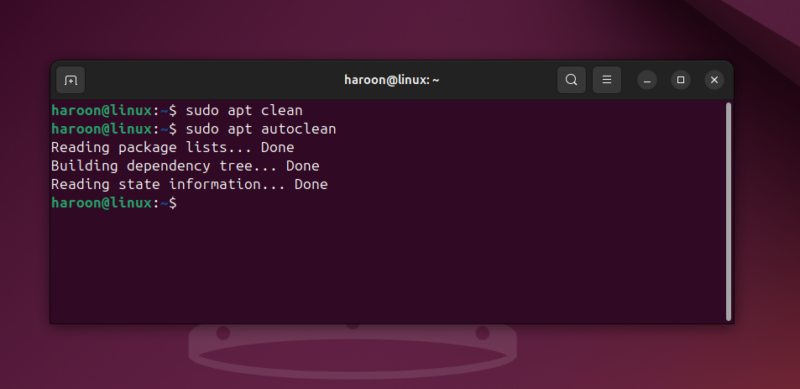
If you use a Debian- or Ubuntu-based system, you can clear these files by running:
sudo

apt clean
If you prefer a slightly safer approach that only removes outdated packages, use:
sudo

apt autoclean
For Fedora or Red Hat-based systems, you can clear the package cache with:
sudo

dnf clean all
Arch users can achieve the same result with:
sudo

pacman

-Scc
Dedicated cleanup utilities, such as BleachBit, also offer a friendly GUI to clean package caches, system temp files and browser cached safely.

The directory /tmp is another good place to check for the temporary files created by running programs, and it contains other file creations. On reboot, they usually clear these files so it is safest to clean them off if you restart your system. if you can’t reboot the files manually with ‘I have done this.
sudo

rm

-rf

/

tmp

/*
Just make sure no critical processes are actively using those files.
Manage Log Files
They are essential for troubleshooting, but log files may grow slowly to create a large amount of disk space when left unchecked. In modern Linux systems, the journal stores system logs that can persist indefinitely on systemd. You can also see how much space they are using with.
journalctl

--disk-usage
If the size is large, you can safely reduce it by keeping only a certain amount of logs:
sudo

journalctl

--vacuum-size

=500M
When you delete old ones that you probably won’t need to be deleted, this keeps recent logs for troubleshooting. In addition to this, traditional logs are in “/var /log/”, and some files such as syslog or kern. A mistake can make log big if something goes wrong, . They can be truncate to clear their content safely instead of deleting them, you can delete them.
sudo

truncate

-s

0

/

var

/

log

/

syslog
Services rely on the file not to break down so that this keeps the files intact. A few clicks of large logs are enough to be detected and removed with a few clics, such as in some Linux GUI programs like Baobab, Filelight or BleachBit.
Remove Old or Unused Packages
Over time, space is slowly absorbed by unused software and leftover dependencies that are often removed from your system to keep it lean and secure. Similarly, in GNOME-based systems like Ubuntu, you can open the App Center, go to theManage** tab and browse through your apps. If you no longer need any app, just choose **Remove** and click **Revoke from there. The same can be done in Discover for KDE users, where the user of KADE is able to do so.

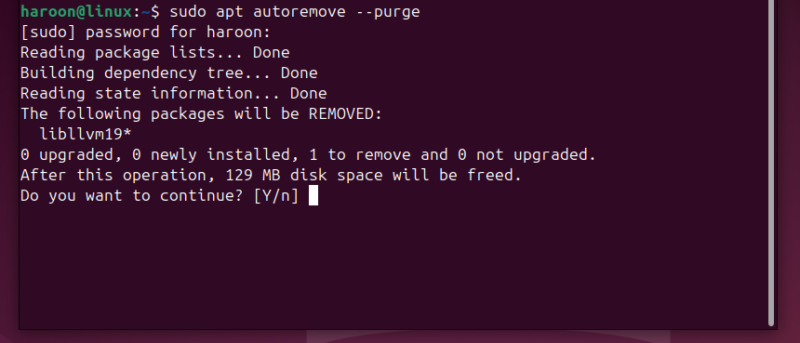
However if you are comfortable with the terminal, then you can delete packages that no longer need and their configuration files. For example, for Debian-based systems run.
sudo

apt autoremove

--purge
If you are on Fedora, you can run:
sudo

dnf autoremove
And for Arch Linux, you can clean orphaned packages using this:
sudo

pacman

-Rns

$

(

pacman -Qtdq

)
This cleanup reduces clutter and keeps your system lean and easier to maintain.
Finally, don’t ignore containerized apps such as Snaps and Flatpak which are often larger than standard packages. List them with snap list or -flatpak list?
Find and Delete Large Files
A lot of gigabytes per minute can be easily absorbed, such as old ISO images, backup archives, database dumps or virtual machine files. Using tools such as Baobab can scan your system, and visually highlight large files and directories so you can quickly spot space hogs and decide what to delete or move.
You can use the ls, a.find and -du commands of commanding from terminal or just like to hunt down large files when you’re working from Terminal? These tools search your system for larger unopened files and list them with their sizes. After locating large files, delete them or transfer them to another location or external drive.
Remove Old Kernels
Each time we upgrade a kernel, Linux keeps old versions of the kernel. This is a safety feature; if you have re-installed ‘new kernels’ your audio or Wi-Fi, you can reboot into the old one. But, you rarely need more than two the current one and the former working one. They are a large area of space that is used by these old kernels, which often go under the radar.
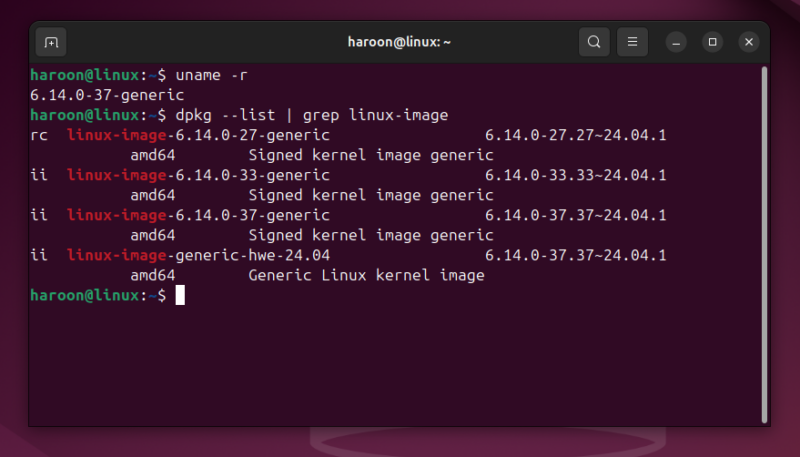
This is usually handled by the sudo apt autoremove command mentioned above, which cleans up the old kernels automatically on modern Ubuntu systems. This is the way to check your current kernel version if you want to be sure If so, just use this.
uname

-r
If you still intend to check all your installed kernels, use:
dpkg

--list

|

grep

linux-image
Now, manually remove specific kernel versions with:
sudo

apt remove linux-image-5.4.0-

42

-generic
If you’re using a kernel that is unbootable, make sure you never delete it; this means the system can be un bootable. Aside from the visual tools like Stacer you can also use such programs, which provide a simple kernel cleaner interface that lists all installed versions of an app and allows for check boxes to remove the ones you don’t need.
Consider Moving Data to External Storage
If you have clean caches, logs and packages but are still having trouble with your drive, then just might be too much data for your driving. A useful approach in this case is transferring large files to external or secondary storage. If you want to mount the external drives so they are available when you need them, you can then mount it and won’t clog up your root partition.
This allows you to safely move data while maintaining permissions and ownership, using tools such as r.ync (along with the use of ) or other tools that allow for this purpose. Plus Services like Nextcloud hosted your own cloud, keeping track of your data if you have it.
Final Thoughts
When you’ve cleared out some space, regular monitoring is the most effective way to prevent the disk from filling up again. But when storage runs out, you’ll see gradual growth early and avoid sudden crises. Alternatively, you can add a disk usage widget to your panel so that it is always visible at the same time when you use it. If you check these things regularly, you can keep your system stable and responsive.
Thanks for reading What to Do When Your Linux Hard Disk Is Running Out of Space
